Find a family name.
Take the name to the temple.
Teach someone else to do the same.
As members of The Church of Jesus Christ of Latter-day Saints we have been encouraged to Find, Take and Teach concerning taking one of our own ancestral names to the Temple. The first part of this injunction involves finding someone who is not presently in the FamilySearch.org Family Tree or who is in the Family Tree but has not yet had his or her ordinances completed. As outlined in the Find Your Family Names, A First-Time Guide, the process starts with signing in to FamilySearch.org and going to the portion of the website dedicated to "Find Family Names for the Temple." (https://familysearch.org/findnames). The instructions involve following the steps set forth in the Guide.
The key to this process as outlined is that people fall into one of three different research tracks: those with apparently no names in the Family Tree, those with some names in the Family Tree and those with many names in the Family Tree. In the first two categories, there are abundant opportunities depending on where the ancestors lived or if they were immigrants from a country with available family history resources.
You might note that the objective of the first page of this handout is the acquisition of a "green temple icon." What are these? Essentially, they are indications that there are ordinances possible for an individual. If they are found and validated, then there is usually a name to take to the temple. What do I mean by validated? Well, much of the time, the existence of a temple opportunity is contingent on resolving a duplicate record or doing more research. If FamilySearch finds a needed ordinance but there is insufficient information about the person to perform the ordinance, then the temple icon is yellow or gold colored. If there is a possible duplicate, then when you click on the icon, there is a warning notice saying that a possible duplicate exists.
In either event, how do the icons get into the Family Tree? You might note a lot of purple (dark blue whatever) temple icons. These indicate that other family members have already worked through the possible green icons and reserved the names for temple work. What if you don't find any green temple icons? That is the real question.
Green temple icons are not manufactured by anything FamilySearch does with or to the Family Tree. They are the product of people, like you and I, doing additional genealogical research and adding names to the Family Tree. No research = No Temple Icons. It is that simple. If you do find a green temple icon, as shown in the handout, by all means take the opportunity to click on the icon, reserved the name for temple ordinances and go to the temple. But once you have clicked on a green temple icon, it is essentially gone. Unless you or someone else does some additional research, that is real research into historical records, no more green temple icons will magically appear.
But there is a more important question. So you found a green temple icon, how do you know you are related to the person with the icon? Is all the information and connections between you as an individual and that person correct? Does it matter if you aren't related? Those are the questions I will address in Part Two of this post.
Stay tuned.
Genealogy from the perspective of a member of The Church of Jesus Christ of Latter-day Saints (Mormon, LDS)
Monday, September 12, 2016
Saturday, September 10, 2016
10 Important Things to Know About the FamilySearch Family Tree
Beyond basic computer skills and some knowledge about how to enter and update entries, there are many important things that you need to know and understand about the FamilySearch.org Family Tree program. In this post, I have selected ten things that I think everyone should know. Here they are:
Number One:
The FamilySearch Family Tree is a Wiki
I have written about this point several times in the past, but it is really the key to understanding how and why the Family Tree works. It is also the reason why many people are initially frustrated with the supposed "changes" to the data in the Family Tree that seems to be going on all the time. A "wiki" is defined as a website that allows collaborative editing of its contents and structure by its users. See Wikipedia: Wiki. Since every registered user of the program has access to all of the entries in the Family Tree, except for those references to living people, all of these users can add, delete, change, modify, edit and merge all of the entries in the program. Change is the result of using a wiki format to store data.
Genealogists are not used to the idea of sharing and collaborating their data. There is a pervasive attitude among researchers that what they find and enter into family records is "their" genealogy. This attitude has been engendered by the fact that historically, genealogists worked alone and were not forced to share their data with anyone else unless they consciously chose to do so. So working with a wiki like the Family Tree is not just a new experience, it is completely new experience.
The Family Tree is not a completely accessible wiki program. The administrators of the Family Tree (FamilySearch employees and indirectly The Church of Jesus Christ of Latter-day Saints) have control over what is and what is not ultimately added as content. But the administrators are not concerned with either the accuracy of the entries or their consistency. If I enter a date incorrectly, there are automatic functions of the program that will assess that date's reasonableness in certain ways, but beyond those quasi-editorial notices, such as the warning icons, there is no one except other users, interested in your particular entries.
You do not own the information you add to the Family Tree. When you enter any information into the Family Tree, that information immediately becomes the common property of all of the users of the program. No one has to ask permission to make any changes etc. to the data in the Family Tree. They might want to ask questions, but the format of the program does not require you or anyone else to do so.
Number Two:
Because the FamilySearch Family Tree is a wiki, you are responsible to maintain the integrity of your own data.
Despite user impressions to the contrary, the information added to the Family Tree is not usually arbitrary or capricious. The concept that "wrong" information is being added to the Family Tree is based on the user's impression as to the "correctness" of the entries. If I think my ancestor was born on a certain day, then anyone changing that entry entry is automatically characterized as wrong.
So what happens if you see such a change? You and the other person entering information are both responsible to see that the information added is correct. You do this by substantiating any changes made with reference to an historical source where the data is found.
Number Three:
There are a number of simple practices that help maintain the integrity of the Family Tree.
The first and most important practice to maintain the integrity of the Family Tree is to "watch" all of those individuals that are of concern to you. The link to watch each individual is found on the individual detail pages for each individual and on the information cards that come up anytime you click on an individual. If you watch someone in the FamilyTree, FamilySearch will send you a list of any changes made to your watched individuals each week. You can review the list and take action to verify any changes.
Your perception that the entries are always changing is not accurate. Overall, there are usually very few changes made to older entries. The key here is adding in sources and making any proper corrections quickly. If you tend to look at the Family Tree every month or so, the number of changes will seem larger than they really are. If you watch your entries and review the weekly list and immediately make any needed corrections, then the cumulative effect of this action will be to decrease the number of changes assuming your own changes and additions are substantially supported by credible sources.
Number Four:
All entries in the Family Tree are tentative.
It is the nature of historical research that all conclusions made are subject to the discovery of more definite and reliable information. In the course of working with the Family Tree, many people report substantial revisions to their traditional perception of their family history. This is caused by finding out that they were adopted, that their parents never married, that some female ancestors had children out of wedlock and so forth. Newly discovered information may revise any of the entries.
Number Five:
The original data that went into the Family Tree was not reliable.
The Family Tree consists of user contributed information gathered by FamilySearch and its predecessor organizations over more than 100 years. The Family Tree is the first time all of this information could be integrated and edited. No one was previously responsible for the accuracy of all of the data. No one at Family Search or before has checked any of the information in the Family Tree for accuracy. You are now responsible for that portion of the data in the Family Tree about you and your family.
Number Six:
Anyone can see any data entered about dead people in the Family Tree
There nothing private or proprietary about the Family Tree except for living people (see below). All entries concerning dead people are visible and entirely accessible to all registered users. If I wanted to, I could start editing entries in "your" portion of the Family Tree. But there is a practical limit on these entries. Why would I want to spend my time on a portion of the Family Tree with people I am not related to? The one exception is famous people who attract attention from those who are unrelated or only wish they were. In some cases the Family Tree is now rendered "Read Only" for some of these individuals.
Number Seven:
All data about living people is in a "Private Space" that cannot be seen by others.
Because data about living people is only viewable by the person entering such data there are some interesting consequences. FamilySearch creates a unique entry for each "living" person and that includes people who are actually dead but have no death information, i.e. are marked living. If that person was or is a member of the Church, likely the information is already in the Family Tree. So if you add in members of your immediate family, i.e. children, parents, siblings etc. who are alive, the entries are almost certain to be duplicates of their own personal entries. See the FamilySearch.org Help Center article entitled, "Understanding Private Spaces."
Number Eight:
The Family Tree is always and will always be a work in progress.
Computers and programs change with the changes in technology. The technology that enables us to have a program such as the Family Tree will continue to evolve in the future and so change is inevitable. There are still a huge number of "enhancements" that could be added to the Family Tree and some of those will undoubtedly surface as time passes.
Number Nine:
The Family Tree is the solution not the problem.
Nearly all the major issues with the operation of the Family Tree were resolved with the upgrade on June 27th, 2016 which should be known as Family Tree Independence Day. The major issues and residual complaints about the program are now entirely focused on the users and the residual uncorrected data. It is time to get busy and clean up your section of the Family Tree and add in every possible source you have or can find.
Number Ten:
The work on the Family Tree will likely never be finished in your lifetime.
There may actually be a relationship between the Family Tree and the end of the world and I do not say this lightly. We are involved in creating a unified, family tree of the entire human race and that work will take a while to complete. I suggest you get busy on your part of the Family Tree and don't expect that your portion of the work will be done by someone else in the Millennium.
You might think of some more important things and so might I.
Number One:
The FamilySearch Family Tree is a Wiki
I have written about this point several times in the past, but it is really the key to understanding how and why the Family Tree works. It is also the reason why many people are initially frustrated with the supposed "changes" to the data in the Family Tree that seems to be going on all the time. A "wiki" is defined as a website that allows collaborative editing of its contents and structure by its users. See Wikipedia: Wiki. Since every registered user of the program has access to all of the entries in the Family Tree, except for those references to living people, all of these users can add, delete, change, modify, edit and merge all of the entries in the program. Change is the result of using a wiki format to store data.
Genealogists are not used to the idea of sharing and collaborating their data. There is a pervasive attitude among researchers that what they find and enter into family records is "their" genealogy. This attitude has been engendered by the fact that historically, genealogists worked alone and were not forced to share their data with anyone else unless they consciously chose to do so. So working with a wiki like the Family Tree is not just a new experience, it is completely new experience.
The Family Tree is not a completely accessible wiki program. The administrators of the Family Tree (FamilySearch employees and indirectly The Church of Jesus Christ of Latter-day Saints) have control over what is and what is not ultimately added as content. But the administrators are not concerned with either the accuracy of the entries or their consistency. If I enter a date incorrectly, there are automatic functions of the program that will assess that date's reasonableness in certain ways, but beyond those quasi-editorial notices, such as the warning icons, there is no one except other users, interested in your particular entries.
You do not own the information you add to the Family Tree. When you enter any information into the Family Tree, that information immediately becomes the common property of all of the users of the program. No one has to ask permission to make any changes etc. to the data in the Family Tree. They might want to ask questions, but the format of the program does not require you or anyone else to do so.
Number Two:
Because the FamilySearch Family Tree is a wiki, you are responsible to maintain the integrity of your own data.
Despite user impressions to the contrary, the information added to the Family Tree is not usually arbitrary or capricious. The concept that "wrong" information is being added to the Family Tree is based on the user's impression as to the "correctness" of the entries. If I think my ancestor was born on a certain day, then anyone changing that entry entry is automatically characterized as wrong.
So what happens if you see such a change? You and the other person entering information are both responsible to see that the information added is correct. You do this by substantiating any changes made with reference to an historical source where the data is found.
Number Three:
There are a number of simple practices that help maintain the integrity of the Family Tree.
The first and most important practice to maintain the integrity of the Family Tree is to "watch" all of those individuals that are of concern to you. The link to watch each individual is found on the individual detail pages for each individual and on the information cards that come up anytime you click on an individual. If you watch someone in the FamilyTree, FamilySearch will send you a list of any changes made to your watched individuals each week. You can review the list and take action to verify any changes.
Your perception that the entries are always changing is not accurate. Overall, there are usually very few changes made to older entries. The key here is adding in sources and making any proper corrections quickly. If you tend to look at the Family Tree every month or so, the number of changes will seem larger than they really are. If you watch your entries and review the weekly list and immediately make any needed corrections, then the cumulative effect of this action will be to decrease the number of changes assuming your own changes and additions are substantially supported by credible sources.
Number Four:
All entries in the Family Tree are tentative.
It is the nature of historical research that all conclusions made are subject to the discovery of more definite and reliable information. In the course of working with the Family Tree, many people report substantial revisions to their traditional perception of their family history. This is caused by finding out that they were adopted, that their parents never married, that some female ancestors had children out of wedlock and so forth. Newly discovered information may revise any of the entries.
Number Five:
The original data that went into the Family Tree was not reliable.
The Family Tree consists of user contributed information gathered by FamilySearch and its predecessor organizations over more than 100 years. The Family Tree is the first time all of this information could be integrated and edited. No one was previously responsible for the accuracy of all of the data. No one at Family Search or before has checked any of the information in the Family Tree for accuracy. You are now responsible for that portion of the data in the Family Tree about you and your family.
Number Six:
Anyone can see any data entered about dead people in the Family Tree
There nothing private or proprietary about the Family Tree except for living people (see below). All entries concerning dead people are visible and entirely accessible to all registered users. If I wanted to, I could start editing entries in "your" portion of the Family Tree. But there is a practical limit on these entries. Why would I want to spend my time on a portion of the Family Tree with people I am not related to? The one exception is famous people who attract attention from those who are unrelated or only wish they were. In some cases the Family Tree is now rendered "Read Only" for some of these individuals.
Number Seven:
All data about living people is in a "Private Space" that cannot be seen by others.
Because data about living people is only viewable by the person entering such data there are some interesting consequences. FamilySearch creates a unique entry for each "living" person and that includes people who are actually dead but have no death information, i.e. are marked living. If that person was or is a member of the Church, likely the information is already in the Family Tree. So if you add in members of your immediate family, i.e. children, parents, siblings etc. who are alive, the entries are almost certain to be duplicates of their own personal entries. See the FamilySearch.org Help Center article entitled, "Understanding Private Spaces."
Number Eight:
The Family Tree is always and will always be a work in progress.
Computers and programs change with the changes in technology. The technology that enables us to have a program such as the Family Tree will continue to evolve in the future and so change is inevitable. There are still a huge number of "enhancements" that could be added to the Family Tree and some of those will undoubtedly surface as time passes.
Number Nine:
The Family Tree is the solution not the problem.
Nearly all the major issues with the operation of the Family Tree were resolved with the upgrade on June 27th, 2016 which should be known as Family Tree Independence Day. The major issues and residual complaints about the program are now entirely focused on the users and the residual uncorrected data. It is time to get busy and clean up your section of the Family Tree and add in every possible source you have or can find.
Number Ten:
The work on the Family Tree will likely never be finished in your lifetime.
There may actually be a relationship between the Family Tree and the end of the world and I do not say this lightly. We are involved in creating a unified, family tree of the entire human race and that work will take a while to complete. I suggest you get busy on your part of the Family Tree and don't expect that your portion of the work will be done by someone else in the Millennium.
You might think of some more important things and so might I.
Friday, September 9, 2016
FamilySearch Labs
The FamilySearch Labs website, or Labs.FamilySearch.org, has a long history of hosting some of the most innovative and useful programs from FamilySearch. Lately, there has been some attrition in the offerings and no new programs added. Only two of the six programs showing on the website are still operational. The latest one to cease operation was the Community Trees program that has been integrated into the Genealogies section of the main FamilySearch.org website and I might add, losing nearly all of its utility in the process.
The two remaining programs are both nearly unknown and very seldom used, but extremely valuable.
Quoting from the Labs website:
The England Jurisdictions 1851 project simplifies research by consolidating data from many finding aids into a single searchable repository that can be accessed by clicking in a parish boundary. Features include contiguous parish and radius search lists and relevant jurisdictions as they existed in England in 1851. Data includes changes to parishes prior to 1851 and lists of non-conformist denominations in a parish. (requires Internet Explorer 7, Firefox 3, Safari 3 or newer)It is a real shame that more people who are investigating their English ancestry do not constantly use this program. I find it immensely useful for identifying specific information about every parish in England.
The second remaining tool is the Standard Finder, described as follows:
Standard Finder provides access to standardized information for names, locations, and dates. These databases are used by several FamilySearch applications to assist researchers in searching for exact spellings as well as for indexers who enter information used for Historical Record Search.Technically, "The Standard Finder" has been replaced by the Place Research Tool. Here is a screenshot of the Place Research Tool:
It is not clear how much support and updating these helpful tools receive. Originally the Labs website was represented as being a place to show new programs from FamilySearch that might be used in the future. Many of the Labs programs were abandoned but some of the features have been incorporated into the main website.
It would be a real shame if the last two remaining, very useful tools went the way of the Community Trees and lost their utility.
Thursday, September 8, 2016
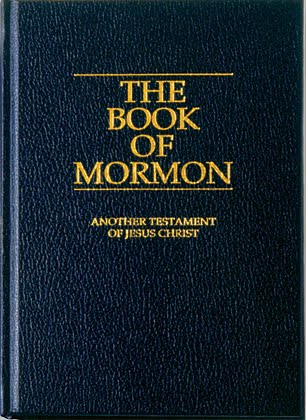
Genealogy and 1 Nephi 3
1 Nephi 3, as it pertains to genealogy, reads as follows:
1 And it came to pass that I, Nephi, returned from speaking with the Lord, to the tent of my father.Continuing with those parts that talk about genealogy:
2 And it came to pass that he spake unto me, saying: Behold I have dreamed a dream, in the which the Lord hath commanded me that thou and thy brethren shall return to Jerusalem.
3 For behold, Laban hath the record of the Jews and also a genealogy of my forefathers, and they are engraven upon plates of brass.
4 Wherefore, the Lord hath commanded me that thou and thy brothers should go unto the house of Laban, and seek the records, and bring them down hither into the wilderness.
5 And now, behold thy brothers murmur, saying it is a hard thing which I have required of them; but behold I have not required it of them, but it is a commandment of the Lord.
6 Therefore go, my son, and thou shalt be favored of the Lord, because thou hast not murmured.
9 And I, Nephi, and my brethren took our journey in the wilderness, with our tents, to go up to the land of Jerusalem.The lessons we learn from this chapter of the Book of Mormon are as follows:
10 And it came to pass that when we had gone up to the land of Jerusalem, I and my brethren did consult one with another.
11 And we cast lots—who of us should go in unto the house of Laban. And it came to pass that the lot fell upon Laman; and Laman went in unto the house of Laban, and he talked with him as he sat in his house.
12 And he desired of Laban the records which were engraven upon the plates of brass, which contained the genealogy of my father.
13 And behold, it came to pass that Laban was angry, and thrust him out from his presence; and he would not that he should have the records. Wherefore, he said unto him: Behold thou art a robber, and I will slay thee.
14 But Laman fled out of his presence, and told the things which Laban had done, unto us. And we began to be exceedingly sorrowful, and my brethren were about to return unto my father in the wilderness.
15 But behold I said unto them that: As the Lord liveth, and as we live, we will not go down unto our father in the wilderness until we have accomplished the thing which the Lord hath commanded us.
16 Wherefore, let us be faithful in keeping the commandments of the Lord; therefore let us go down to the land of our father’s inheritance, for behold he left gold and silver, and all manner of riches. And all this he hath done because of the commandments of the Lord.
17 For he knew that Jerusalem must be destroyed, because of the wickedness of the people.
18 For behold, they have rejected the words of the prophets. Wherefore, if my father should dwell in the land after he hath been commanded to flee out of the land, behold, he would also perish. Wherefore, it must needs be that he flee out of the land.
19 And behold, it is wisdom in God that we should obtain these records, that we may preserve unto our children the language of our fathers;
20 And also that we may preserve unto them the words which have been spoken by the mouth of all the holy prophets, which have been delivered unto them by the Spirit and power of God, since the world began, even down unto this present time.
21 And it came to pass that after this manner of language did I persuade my brethren, that they might be faithful in keeping the commandments of God.
22 And it came to pass that we went down to the land of our inheritance, and we did gather together our gold, and our silver, and our precious things.
23 And after we had gathered these things together, we went up again unto the house of Laban.
24 And it came to pass that we went in unto Laban, and desired him that he would give unto us the records which were engraven upon the plates of brass, for which we would give unto him our gold, and our silver, and all our precious things.
25 And it came to pass that when Laban saw our property, and that it was exceedingly great, he did lust after it, insomuch that he thrust us out, and sent his servants to slay us, that he might obtain our property.
26 And it came to pass that we did flee before the servants of Laban, and we were obliged to leave behind our property, and it fell into the hands of Laban.
27 And it came to pass that we fled into the wilderness, and the servants of Laban did not overtake us, and we hid ourselves in the cavity of a rock.
- Obtaining the genealogy of Lehi's ancestry and the records of his ancestors was important enough to risk the lives of Lehi's sons.
- The records went back far enough, as we learn later, to establish Lehi as a descendant of Joseph who was sold into Egypt.
- The records were important to preserve the language and history and religion of Lehi's descendants.
- The sons of Lehi, convinced of the importance of the records, were willing to try to obtain them by giving up all of their gold, silver and precious things.
- Ultimately, as we learn later in the narrative, Laban lost his life because of his unwillingness to listen to the commandments of the Lord concerning the genealogy.
- Lehi and his sons were commanded by God to obtain the record.
Think about it. Do we realize that we have also been commanded by God to seek out our kindred dead in the records that we have available? Are we willing to pay the price paid by Lehi and his sons to obtain our own records. Will we go and do the things the Lord has commanded us to do in obtaining our own genealogy?
Think about it again.
Wednesday, September 7, 2016
Guild of One-Name Studies Database added to FamilySearch.org
Many of those who use the FamilySearch.org website are not aware of the multiple resources available under the "Genealogies" tab. Some time ago, the Guild of One-Name Studies was added to the list of searchable databases but only recently, did FamilySearch and the Guild of One-Name Studies make a formal announcement of the addition. In a News Release dated September 6, 2016, gives the following information.
The Guild of One-Name Studies, a charitable organization that promotes facts about given surnames, and FamilySearch International, a nonprofit and the largest genealogy organization in the world, announced today The Guild’s collections will now be searchable at FamilySearch.org. The partnership gives Guild members another source for preserving their great work while also allowing more researchers across the globe to benefit from exploring the variant spellings of their personal surnames and possibly connect with others with the same last name throughout the world.
The study of one’s last name (one-name or surname) researches all known occurrences of that particular surname in all identifiable resources worldwide, as opposed to the ancestors or descendants of a person. Such richly compiled studies can assist a family history researcher see the geographical distribution of surnames in their tree over centuries which can help in reconstructing family lines bearing variants of those names. A common hope of customers that use surname studies is to identify the actual geographic locale of origin of a family surname. This could very well happen for unique surnames, but for common surnames that reflect an occupation (like “Farmer” or “Fisher”) or a patronymic-type surname (Johnson or Williamson), there may not be a single place of origin.
Cliff Kemball, Guild Publicity Manager said “The partnership with FamilySearch give Guild members another method of preserving their One-Name Study data. Their data is fully preserved for the long term, while still remaining within the control of the Guild member, who may update, replace or delete it as their work develops.”
The Guild was founded in 1979, and has over 2,980 members, studying over 8,935 individual surnames. The Guild of One-Name Studies website launched April 1, 2016, and is continually expanding its list of surnames. The Guild expects the volume of data submitted by Guild members to significantly increase now that they can make their research contributions online. And teaming up with FamilySearch.org will ensure more people are making interesting discoveries about their surnames.The Guild's website is as follows:
It turns out that I had an interesting discussion with their representatives at the last RootsTech Conference in 2016. Some of the research techniques I use to determine the the frequency of surnames in England are part of the studies the Guild has made.
Tuesday, September 6, 2016
More thoughts on the future of Family History Centers
I had several rather lengthy and insightful comments to my initial post on the future of Family History Centers and as a result, I decided that I needed to follow up with some more thoughts on the subject.
Many historically important institutions are being dramatically affected by the changes in technology: newspapers, libraries, book publishers and many others. The traditional view of Family History Centers is also being altered by the so-called "Information Revolution." As more and more information becomes available online, digitized copies of genealogically relevant documents are being swept up and put online in the flood of general information becoming available. The concept of a Family History Center as a place to go to "do genealogical research" is fading rapidly. When I moved to Provo, Utah, one of the "benefits" I saw was my proximity to the Family History Library in Salt Lake City, Utah. As a result of my move, I took advantage of the short trip and I have spent days researching in the Library.
However, over just the two short years I have been in Provo, I have discovered a number of things that have eroded my need to travel to Salt Lake. First, of course, was the fact that the Brigham Young University Family History Library and the huge collection of books and other reference material in the Harold B. Lee Library obviated my need to travel. But even more importantly, the ongoing digitization program of books and microfilm conducted by FamilySearch began to provide most of the research that I needed. In addition, I could still order the remaining, not-yet-digitized microfilm and view it in the BYU Family History Library.
Of course, this was a highly personal experience. But at the same time in talking to various directors of Family History Centers around the United States, I began to see a pattern. The continued, increased availability of digitized records was having its impact on the use of the smaller, local Family History Centers. As I observed in my previous post, the function of Family History Centers was changing.
I did learn from a comment that the main floor of the Family History Library in Salt Lake City, Utah is now under development into a Family Discovery Center. This movement to Family Discovery Centers which are high-tech introductions to family history, may be extended to smaller, more local facilities thereby replacing the present research emphasis. If this occurs, as it will probably happen in some form or another, then the research component of family history research will move into the homes and the Family History Centers will become more places to be motivated or to be taught. The days of the static Family History Center, open for use during some hours of the week and staffed by volunteers who sit and wait for patrons to come, will pass away.
Both volunteers or missionaries in the Family History Centers as well as the local Family History Consultants will need to become proactive and seek out opportunities to help people on a one-on-one basis rather than expecting people to come and use their resources, resources that are becoming more and more available to everyone in their homes via the Internet.
The changes in the need for a Family History Center in the current model must also be accompanied by a change in the way family history is viewed. Rather than being an activity that you go someplace to do, like my trips to the Family History Library, it is quickly becoming something that can be done anyplace at any time. This movement from away from the locational aspects of genealogy is fueled by the availability of mobile devices. I can now do nearly all of my genealogical research on a tablet computer from anywhere I have a connection to the Internet.
Now, as the commentators noted, there are still places where Family History Centers become the location where people can access the Internet. But as programs and apps develope to adapt to the limitations of smartphones and tablets, the need to sit in front of a dedicated computer will fade away.
What about the educational function of the Family History Center? Many of the existing Centers are merely a small room with a few computers and some other limited resources, principally microfilm readers. They are located in ward and stake buildings across the world. In some cases already, ward members come to church and bring their electronic devices and then congregate in classrooms and help each other with their research. No formal designation of a "Center" is necessary. This is presently a major issue of uniformly good WiFi connections, but that is technological problem that can be solved. So, if you do not need a dedicated room, although it would be nice to have, to do your genealogical research, then what happens to the existing Family History Centers? They slowly or quickly disappear.
It is important at this point in our history to recognize these changes and start making adjustments by capacitating our existing Family History Consultants to take over the need for instruction and assistance. At some point, those needing assistance need to be sent to Family History Consultants rather than Family History Centers.
What about the large libraries and centers? There is still a need for centralized resource centers, such as the Family History Library in Salt Lake City and the BYU Family History Library in Provo. People need to have access to major genealogical collections. Not all of the resources will ever be digitized and not all will have broad access. But the day to day business of genealogical research will certainly become decentralized and more generally available.
Monday, September 5, 2016
Thoughts on the future of Family History Centers
The main building of the Mesa, Arizona FamilySearch Library has now been closed and unused for almost two years. The Mesa Library has been operating with a reduced staff out of the Training Center at 464 E. 1st Avenue, Mesa, Arizona. During the past few months, and even as recently as this past week, I have been involved in extensive discussions with Family History Center Directors who are concerned about the future of their particular Family History Center. There are a number of factors that create this concern:
- The fact that the microfilm collection in the Granite Vault will be entirely digitized within a relatively short period of time
- The continued digitization of books and other materials uploaded to the FamilySearch.org website now totaling over 304,000 volumes
- Statements made concerning the fact that the future Family History Center will be in the home and the continued increase in resources available in the home
- The Find, Take, Teach program that emphasises Family History Consultants as providing direct support to people in their homes
Years ago, a larger Family History Center, such as was the Mesa facility, was extensively used as a research center because it had a substantial collection of readily available microfilm and a lot of excellent reference books. It was also designated, as are all Family History Centers, as the place you had to visit to obtain access to the vast microfilm collection primarily housed in the Family History Library in Salt Lake City, Utah. Rented microfilm was and is only shipped to officially designated Family History Centers. In addition, the Family History Centers provided support personnel in the form of missionaries and volunteers who could help patrons with their personal research.
It doesn't take a great deal of analysis to realize that if the microfilm is digitized it will not be available for shipment on loan. If, as has been announced, the end of the microfilm era of family history is imminent, then this major function of a Family History Center disappears. In addition, larger centers, such as the Mesa FamilySearch Library, now have the majority of their book collections digitized and online. At the same time, independent of anything being done by FamilySearch, the amount of digitized genealogical information continues to explode.
The one thing the Family History Centers retain as a unique resource is the Family History Center Portal.
I had personally noticed that as time passed at the Mesa FamilySearch Library, that few of the microfilms in the center's archives were being used almost none of the books were being used. Patrons primarily came to the center for help or to use the free resources provided by the Family History Center Portal. Three of the most prominent offerings on the Portal are now available for free in the homes of members of The Church of Jesus Christ of Latter-day Saints. From time to time the content of the Portals "free" programs has changed as the ownership of the programs has changed and as other online resources have become available. For example, the Digital Public Library of America now has over 14 million free resources that were not available just a few years ago. In fact, it has been recently announced that the Digital Public Library of America has an agreement to make the the FamilySearch.org digital historical book collection accessible through the DPLA website.
For some time now, FamilySearch has been developing the Family Discovery Center concept. At one time, the Mesa FamilySearch Library was discussed as a possible site for such a Center. The main such center is located presently in the Joseph Smith Memorial Building in downtown Salt Lake City, Utah. Another such center was also opened in Seattle. Since the initial concept was introduced, there has been relatively little said about the future expansion of this concept but there is still some discussion among Family History Directors and personnel about how the Family Discovery Centers might impact existing Family History Centers. The main floor of the Family History Library in Salt Lake City, Utah was remodeled and there was some discussion about the possibility that the main floor would become a Family Discovery Center, however the main floor is now mostly computer stations and nothing has been said recently about any further changes.
All of this certainly raises some significant issues about Family History Centers, especially those with very little patrons usage. In the southern portion of the Salt Lake Valley, many local centers were closed when the Riverton FamilySearch Library was opened.
Of course, I have no particular insight or knowledge about the future plans for Family History Centers. But it is clear, at least for the larger centers, that technology and alternate sources of information primarily from the continued digitization of microfilm and books will impact their future.
Speculating, I would think that the resources now going into the larger centers and in developing Family Discovery Centers would be more effectively used to expand the training and support of Family History Consultants and Outreach Family History Service Missionaries.
Meanwhile, facilities such as the Brigham Young University Family History Library, which is not part of FamilySearch, will continue to function as major research facilities and provide the high level research support needed by some researchers.
Subscribe to:
Posts (Atom)