

 Posts
Posts


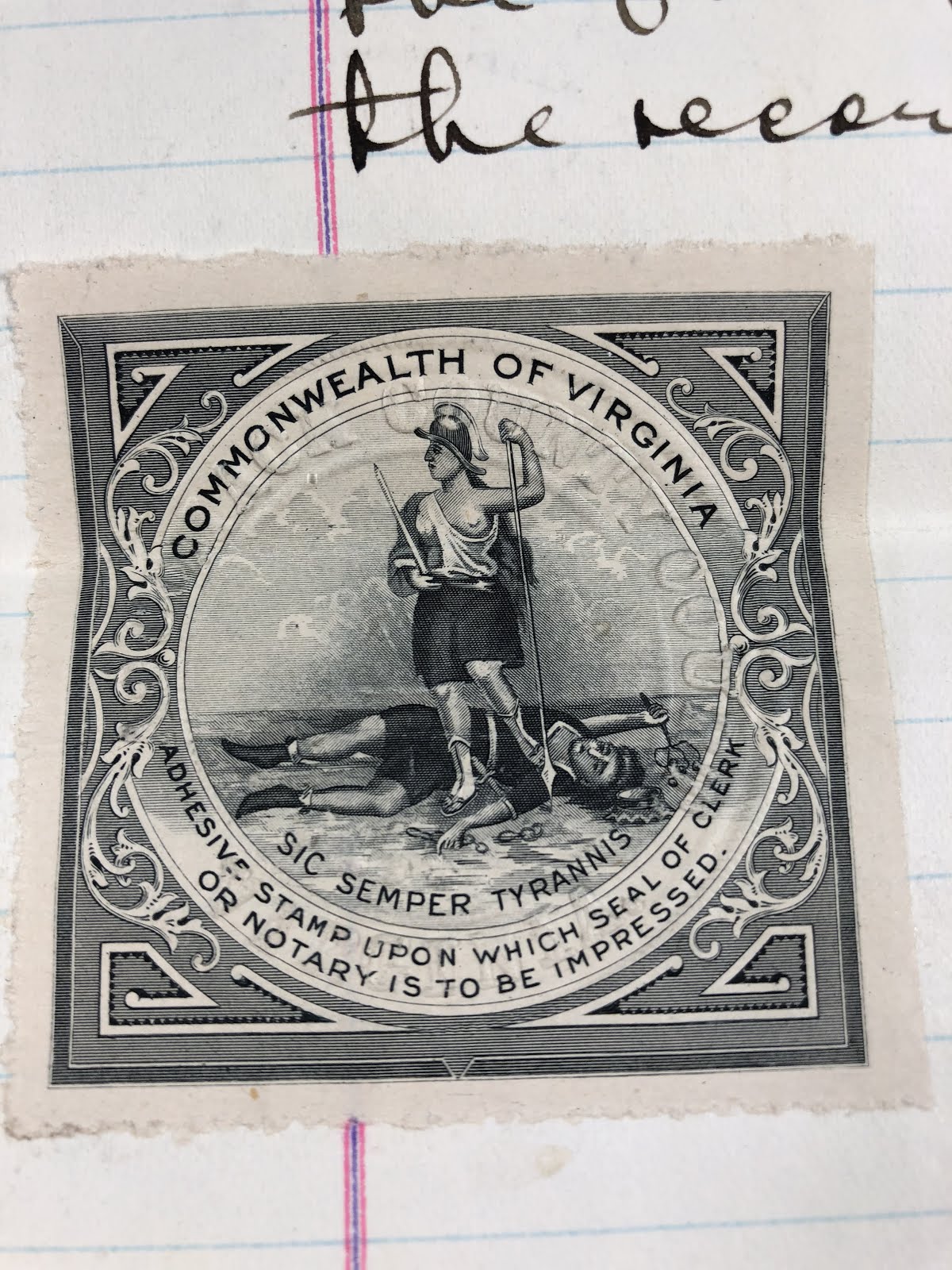 |
| Really strange adhesive stamp for Notary or Clerk's seal on a legal document from Virginia |
Note: You can do a Google search for "A Family History Mission James Tanner" to see all the previous posts in this ongoing series. You can also search for "James Tanner genealogy" and find them or click back through all the posts.
As the days pass we are getting close to the end of our one-year Senior Mission. As a result, I am trying to summarize and reflect on the work we have been doing in the Maryland State Archives, here in Annapolis, Maryland. In this post, I am illustrating images from one part of a probate action. I am also commenting on the documents. The overall FamilySearch digitization projects is broken down into segments (also called projects) that reflect the way the records are maintained by the court.
First, the image above is a very strange adhesive stamp that was used as the base for a Notary Stamp or Stamp of the Clerk of the Court embossed impression. I have never seen anything like this before. At one time, the stamps were placed on seals, sometimes red.
Here we go.

During the preparation of the documents for digitization, the volunteers, including the Senior Missionaries, fill out a "target sheet" for each file. A complex or contested probate action can last for years and so these "files" may be only one part of the entire action unless the deceased's probate estate is very small. The target sheets are being entered into spreadsheets and then used to make a limited index of the files. Over time, these indexes will be digitized with the probate files. Previously digitized files will also have indexes. This will take quite a long time to create.
This digitization project had been going on for years before we arrived and will continue for years after we leave.
If you need help understanding a probate action, I suggest my multi-part series on probate on the Brigham Young University Family History Library YouTube Channel. See this one for the first in the series:
Probate in the Beginning Part 1
You can search on the term probate on the BYU Family History Channel YouTube Channel to find all the other videos in this series.
The court usually has a cover sheet or envelope for every pleading filed. In the case of the Orphans Court in Maryland, the cover sheet information is usually entered on the back of a pleading or during the time of this example on an envelope. This is the first item digitized.

These particular envelopes are very brittle and disintegrating. They are very difficult to handle and we are always sweeping up the pieces that fall off. Absent their digitization, they would have been a pile of scraps in a few more years. During this time period, some of the information was stamped onto the envelope and the rest filled in by hand. There are thousands upon thousands of these files with this type of envelope.
Here is a pleading cover sheet.

This cover sheet has the name of the law firm and the filing information for the court. The type of filing is an account of sales, that is a report to the court of the property sold by the estate administrator. Typewritten pleadings only began appearing in the late 1800s and were not common until about 1910 to 1915.
This is a copy of the Account of Sales Pleading:

We work on specific projects. This project is for Baltimore City. This particular sale is important because it identifies the real property owned by the deceased. This suggests that additional research could find the deed or deeds to the properties and the names of the sellers and purchasers. It would also suggest researching in a city directory and tax records and well as several other types of records such as census records, school records and so forth.
Here is Page 2 of the document.
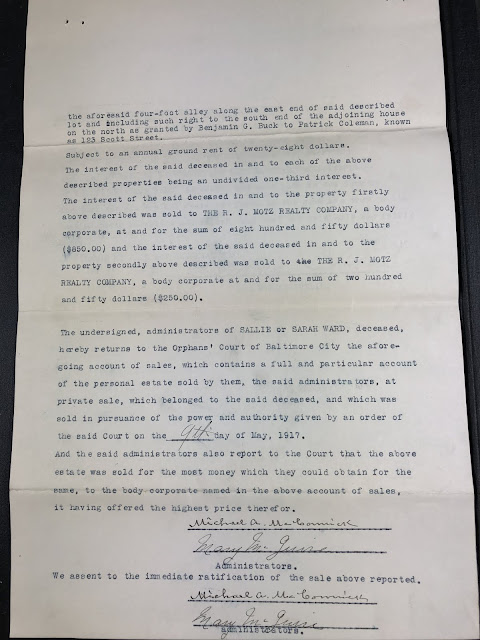
The small amount of the sale price indicates the economic level of the deceased.
Here is the certification of the document by a Notary Public. Notaries only came into existence in the last half of the 1800s.

This is the pleading side of an Order NISI. An Order NISI is a conditional order which is to be confirmed unless something is done, which has been required by the court, by a time specified. What this means is that the court is ordering someone to do something by a certain time. Very, very few of the cover side of these particular documents have any of the blank spaces filled in.

Here is the other side of the Order which includes the body of the Order with the information filled in.

Most of these documents are routine and do not have a lot of information for a genealogist.
Here is the Notice of Publication. Before a sale is made, the law requires any action by the estate, such as the sale of real property, to be published or notice given in some fashion.

Again, the cover side of these documents seldom has any writing on them other than the printed form. Here is the side with the writing.

This is a valuable piece of information. The notice was published in a local newspaper. With this information, you can possibly find a death notice or obituary in the same newspaper. Since the newspaper notice is typeset, the name of the deceased is readable when it may not be on the handwritten notices and filings. It also identifies a court date for a hearing and a record of the hearing may also provide more information.
Here is the Final Order of Ratification. Although it is entitled a "final" order it is often not final. Again, this side of the document is seldom filled in.

This is the side of the document with the information about the Order.

Remember, this is only one part of the entire probate action. The FamilySearch digitization project will eventually cover all of the filings but the researcher will have to look in all the different court records to find the complete action. I would suggest that this illustrates the value of indexing because it helps to consolidate fragmented documents such as these.
As the days pass we are getting close to the end of our one-year Senior Mission. As a result, I am trying to summarize and reflect on the work we have been doing in the Maryland State Archives, here in Annapolis, Maryland. In this post, I am illustrating images from one part of a probate action. I am also commenting on the documents. The overall FamilySearch digitization projects is broken down into segments (also called projects) that reflect the way the records are maintained by the court.
First, the image above is a very strange adhesive stamp that was used as the base for a Notary Stamp or Stamp of the Clerk of the Court embossed impression. I have never seen anything like this before. At one time, the stamps were placed on seals, sometimes red.
Here we go.

During the preparation of the documents for digitization, the volunteers, including the Senior Missionaries, fill out a "target sheet" for each file. A complex or contested probate action can last for years and so these "files" may be only one part of the entire action unless the deceased's probate estate is very small. The target sheets are being entered into spreadsheets and then used to make a limited index of the files. Over time, these indexes will be digitized with the probate files. Previously digitized files will also have indexes. This will take quite a long time to create.
This digitization project had been going on for years before we arrived and will continue for years after we leave.
If you need help understanding a probate action, I suggest my multi-part series on probate on the Brigham Young University Family History Library YouTube Channel. See this one for the first in the series:
Probate in the Beginning Part 1
You can search on the term probate on the BYU Family History Channel YouTube Channel to find all the other videos in this series.
The court usually has a cover sheet or envelope for every pleading filed. In the case of the Orphans Court in Maryland, the cover sheet information is usually entered on the back of a pleading or during the time of this example on an envelope. This is the first item digitized.

These particular envelopes are very brittle and disintegrating. They are very difficult to handle and we are always sweeping up the pieces that fall off. Absent their digitization, they would have been a pile of scraps in a few more years. During this time period, some of the information was stamped onto the envelope and the rest filled in by hand. There are thousands upon thousands of these files with this type of envelope.
Here is a pleading cover sheet.

This cover sheet has the name of the law firm and the filing information for the court. The type of filing is an account of sales, that is a report to the court of the property sold by the estate administrator. Typewritten pleadings only began appearing in the late 1800s and were not common until about 1910 to 1915.
This is a copy of the Account of Sales Pleading:

We work on specific projects. This project is for Baltimore City. This particular sale is important because it identifies the real property owned by the deceased. This suggests that additional research could find the deed or deeds to the properties and the names of the sellers and purchasers. It would also suggest researching in a city directory and tax records and well as several other types of records such as census records, school records and so forth.
Here is Page 2 of the document.

The small amount of the sale price indicates the economic level of the deceased.
Here is the certification of the document by a Notary Public. Notaries only came into existence in the last half of the 1800s.

This is the pleading side of an Order NISI. An Order NISI is a conditional order which is to be confirmed unless something is done, which has been required by the court, by a time specified. What this means is that the court is ordering someone to do something by a certain time. Very, very few of the cover side of these particular documents have any of the blank spaces filled in.

Here is the other side of the Order which includes the body of the Order with the information filled in.

Most of these documents are routine and do not have a lot of information for a genealogist.
Here is the Notice of Publication. Before a sale is made, the law requires any action by the estate, such as the sale of real property, to be published or notice given in some fashion.

Again, the cover side of these documents seldom has any writing on them other than the printed form. Here is the side with the writing.

This is a valuable piece of information. The notice was published in a local newspaper. With this information, you can possibly find a death notice or obituary in the same newspaper. Since the newspaper notice is typeset, the name of the deceased is readable when it may not be on the handwritten notices and filings. It also identifies a court date for a hearing and a record of the hearing may also provide more information.
Here is the Final Order of Ratification. Although it is entitled a "final" order it is often not final. Again, this side of the document is seldom filled in.

This is the side of the document with the information about the Order.

Remember, this is only one part of the entire probate action. The FamilySearch digitization project will eventually cover all of the filings but the researcher will have to look in all the different court records to find the complete action. I would suggest that this illustrates the value of indexing because it helps to consolidate fragmented documents such as these.


