Genealogy from the perspective of a member of The Church of Jesus Christ of Latter-day Saints (Mormon, LDS)

Friday, March 8, 2019

10 Updated Suggestions for Ward Temple and Family History Consultants

https://www.lds.org/family-history/temple-family-history-consultant?lang=eng
I have been reading some interesting online comments recently in response to the talks given by Elder Dale G. Renlund, Elder Gary E. Stevenson, and Elder David A. Bednar of the Quorum of the Twelve Apostles of The Church of Jesus Christ of Latter Day Saints at a Temple and Family History Leadership Meeting held on Thursday, February 28, 2019, during RootsTech 2019 in Salt Lake City, Utah. In light of the newly clarified policies announced in this meeting and after thinking about the messages of the talks that were given, I have 10 Suggestions for Temple and Family History Consultants.

I have served as both a Ward Temple and Family History Consultant and as an Area Temple and Family History Consultant and as expressed by Elder Rasband at the beginning of his talk, over the course of many years, I have yet to have any Ward or Stake leader instruct me in the duties or responsibilities of my callings. I guess under these circumstances I often recall the counsel of Section 107 of the Doctrine and Covenants, quoted as follows in verses 99 and 100:
99 Wherefore, now let every man learn his duty, and to act in the office in which he is appointed, in all diligence. 
100 He that is slothful shall not be counted worthy to stand, and he that learns not his duty and shows himself not approved shall not be counted worthy to stand. Even so. Amen.
I would note that there doesn't seem to be any mention in these two verses about someone else's responsibility to teach us all our duty to learn to act in the offices to which we are appointed. Hmm. Perhaps the term "personal initiative" could be appropriately be applied to the situation of being called as a Temple and Family History Consultant? Here is my first suggestion:

Suggestion #1: When you are called as a Temple and Family History Consultant take the initiative to review the massive amount of information available to you online about your duties. 

You can start with all of the instructions on the ChurchofJesusChrist.org website. You might also want to watch the Temple and Family History Leadership Meeting online. Here is a list of links to the pertinent instruction to get started.
Suggestion #2: If you have any concerns about your ability to teach others how to use the FamilySearch.org website, take advantage of The Family History Guide's instructions.

Knowledge is power and any concerns you might have about teaching someone how to use the FamilySearch.org website including the Family Tree to help people find their ancestors are answered in the vast resources of The Family History Guide. If you or anyone you talk to is at all concerned about using this website, please be aware that it is linked directly from both the ChurchofJesusChrist.org and FamilySearch.org, although the links are somewhat obscure. Before those links were established, the website had to go through Church correlation and pass review. 

Suggestion #3: If you have any doubts about your ability to help others find the names of their ancestors to take to the Temples learn about the Ordinances Ready app.

In the past, there has been an emphasis on finding "green icon" on the FamilySearch.org Family Tree as a method of obtaining family names that are ready for Temple ordinances. These ubiquitous icons still exist but the emphasis for obtaining existing names has changed dramatically. The Ordinances Ready app, located on FamilySearch.org under the menu item for Temple, has an entirely different focus. In his talk at RootsTech 2019, my cousin Ron Tanner, the FamilySearch Family Tree Product Manager (his job title may have changed), outlined the sources of the names obtained by the Ordinances Ready app. The app obtains the names from the following sources, in order:

1. It pulls names from your own reservation list on FamilySearch.org
2. It pulls from any ordinances you personally have shared with the Temples
3. It pulls names related to you from the global temple list of shared names
4. It finally walks up and down your lines looking for other available ordinances (i.e. green icons)
5. If none of these work, it pulls a name of an ancestor from the global temple list

Since most of the names it will find have already been released to the Temples, considerations of duplicates and errors should not be a concern. These names are already reserved and if there are duplications and errors, there is not much you can do especially with those you have on your own reserved list. But I would suggest that before doing the ordinances, that you check the ID numbers of the people on the cards to see if, by chance, the ordinances you are planning on doing have already been done. 

There is presently a large backlog of names waiting to be done at the Temples. This may change in the future, but right now, it is a good idea to work on the names already submitted if you cannot or do not care to do any actual research. 

Suggestion #4: Learn about doing actual genealogical research from the huge collection of resources on YouTube.com

The Brigham Young University Family History Library has over 400 instructional videos on its BYU Family History Libray YouTube Channel and this is just a start. There are almost endless resources online about how to get started with genealogical research. Think about this, many times during our journey through life, we may be called to Church callings that we know little or nothing about. For example, you may have been called to be a Scoutmaster or a Relief Society President. When you were called, I suspect that no one told you how to do your job. But if you were diligent, you soon found out about available training either online or from meetings. Don't wait around until someone trains you. You must be proactive. See Suggestion #1 above.

Suggestion #5: Stop fixating on changes in the FamilySearch Family Tree.

I am getting pretty tired of criticism of the FamilySearch.org Family Tree. I don't want to go back over the issues and the unproductive comments and complaints that people make about the Family Tree again right now but I do reserve the right to make comments in the future. Right now, if you want to start with something positive watch some of all of the following videos on the subject:
These videos will give you answers to some of the complaints and concerns but there are a lot of other places to go for further information if you look.

Suggestion #6: Watch as many videos by Ron Tanner as you can find online.

Ron is both entertaining and informative. He is the authority on the FamilySearch.org Family Tree and is the best source of accurate information. The simple way to begin learning about the Family Tree is to search for "Ron Tanner FamilySearch" on Google. That will give you hours of enjoyment and instruction. You can also see his Facebook page Family History Ron

Suggestion #7: Get involved in the real genealogical community.

Most members of The Church of Jesus Christ of Latter-day Saints think that genealogy is something done only by some older Church members. They have no idea that genealogy is a fairly common activity by others outside of the Church all around the world. To get some idea of the interest level in your community or county or state, look for a "genealogical society" in your area. Simply do a Google search for "genealogical society near me" and see what happens. You will be surprised to find out that there are people in your area who are dedicated to finding their ancestors and who have nothing to do with the Church. Consider joining and supporting their society. 

Suggestion #8: Start asking people around you, particularly in Church meetings, if they need help with finding their ancestors.

You might be surprised to learn that people actually do need help. Once again the key here is being proactive. If you think people are going to call you for help merely because they sustained you in a Church meeting, you are sadly mistaken. However, don't be a nag or a bother. Good people skills are a positive virtue for Temple and Family History Consultants. Telling people all about your personal research and all your problems with the Family Tree is not a particularly good way to garner interest in family history. Happily offering and actually providing help and resources is a good way to start. 

Suggestion #9: Don't keep making your leaders feel guilty about family history.

You do your job and let them do theirs. Do not get obsessed with the fact that you are "not getting the support I need" from your leaders. Not many of them have any interest in doing their own family history much less helping you or others. Sometimes being ignored is a very good thing. Think about my next suggestion carefully. Take some time to talk to people around you about family history and offer to help them personally. Follow through. Yes, you will have to spend some time talking and teaching, but not in a formal classroom setting. No one learns family history in a classroom. They learn it by doing their own work and if they need help, you need to be there to help them. 

Suggestion #10: Learn all you can about genealogy, genealogical research, computers, family history apps, and family history and then share it with others, one-by-one, on their computers when possible.

I think this last suggestion sounds a little bit like my first suggestion. Over the years, I have seen many people who knew little or nothing about family history or genealogy become competent teachers and mentors over time. The one thing I enjoy the most is learning something new. I spend part of every day learning something new. Right now, I am learning (for the third time) how to do videos and put them online. Of course, my subject matter will be genealogy, but I always start with the hardest subject I can find and then learn all I can about it. To do your job as a Temple and Family History Consultant, you need to start learning and keep learning. When we stop learning, we start dying. 

Wednesday, March 6, 2019

Website Name Changes for The Church of Jesus Christ of Latter-day Saints

https://www.ksl.com/article/46504608/the-church-of-jesus-christ-of-latter-day-saints-changes-names-of-major-websites
In keeping with counsel of President Russell M. Nelson, President and Prophet of The Church of Jesus Christ of Latter-day Saints, many of the existing Church websites have had name changes in the past two days. Here is a list of the websites with the old and new names:

There will undoubtedly be more changes. I have been using the full name of the Church for years according to the media Newsroom Style Guide. From looking at the ChurchofJesusChrist.org website, it looks like there is a lot of work for the website managers left to do. 

Sunday, March 3, 2019

Organizing Temple and Family History Service at the Ward Level

https://www.familysearch.org/blog/en/elder-dale-g-renlund-2019-temple-and-family-history-leadership-instruction/

I was in tears when I heard Elder Dale G. Renlund of the Quorum of the Twelve Apostles as he spoke at the Temple and Family History Leadership Instruction meeting on February 28, 2019. This clarification at least gives Temple and Family History Consultants a starting point for understanding their role and position in the Ward and Stake organization. There are still a lot of questions that need to be answered. Such as the role of the Stake Temple and Family History Consultants and Area Temple and Family History Consultants. The important thing is that the Standard Pattern indicates how Temple and Family History Consultants communicate with their leaders.

https://www.familysearch.org/blog/en/elder-dale-g-renlund-2019-temple-and-family-history-leadership-instruction/
Here are some links to more extensive reports about the meeting.

https://www.familysearch.org/blog/en/elder-dale-g-renlund-2019-temple-and-family-history-leadership-instruction/

https://www.familysearch.org/blog/en/2019-temple-family-history-leadership-instruction/

https://www.familysearch.org/blog/en/elder-david-bednar-sister-susan-bednar-2019-family-discovery-day-rootstech/

https://www.familysearch.org/blog/en/david-bednar-2019-temple-family-history-leadership-instruction/

https://www.familysearch.org/blog/en/elder-gary-e-stevenson-2019-temple-and-family-history-leadership-instruction/


Monday, February 25, 2019

Off to RootsTech 2019

https://www.rootstech.org/why-attend?cid=tp-rt-6517
Well, as I get older time passes more quickly and here we are at another week for RootsTech 2019. it will be a little bit strange for me to go back after missing a whole year while I was in Annapolis, Maryland digitizing records for FamilySearch at the Maryland State Archives. It seems like even though time passes quickly, I have been thinking about and planning for the year's RootsTech Conference for a long time.  I will be just as busy as usual. I will be doing two presentations for the BYU Family History Library on Thursday and Friday, and a presentation for MyHeritage.com on Friday. You can check at the booths for the schedule of presentations including mine at both the BYU Family History Library booth and the MyHeritage.com booth. I will also be helping out at the booth for The Family History Guide #217. You may also find me at the Media Hub with the other RootsTech Ambassadors.

The rest of the time, I will either be in meetings or wandering around the exhibit floor renewing acquaintanceships and finding out about the latest changes and technologies. Please stop me or stop by the booths and say hello.

The weather reports for Salt Lake City don't look too good. As I write this post, it is supposed to be snowing here in Provo but it isn't but it is still cold. Be prepared for cold weather and possible rain or snow. There is a very good video series called the "Road to RootsTech Video Series. " I would strongly recommend watching these videos in preparation for the conference especially if you haven't attended before. If you have attended before, particularly last year, you may wish to watch the series to see all the changes that were made because of difficulties experienced last year.

Hope to see you there. Since I will be at RootsTech, I doubt I will get any blog posts written until after the conference.


Sunday, February 24, 2019

Thoughts on the name of The Church of Jesus Christ of Latter-day Saints

https://www.lds.org/general-conference/2018/10/the-correct-name-of-the-church?lang=eng
In the October 2918 General Conference of The Church of Jesus Christ of Latter-day Saints, President Russell M. Nelson began his talk by stating:
Today I feel compelled to discuss with you a matter of great importance. Some weeks ago, I released a statement regarding a course correction for the name of the Church. I did this because the Lord impressed upon my mind the importance of the name He decreed for His Church, even The Church of Jesus Christ of Latter-day Saints. [Footnotes omitted]
For many years and a member of the online journalistic community in writing this blog, I have tried to adhere to the Church's Style Guide concerning the name of the Church. The Style Guide is directed at journalists for all types of publications, most directly newspapers. I think it is important to know that any organization whether religious or otherwise would like to be correctly identified. Here is the Style Guide as set forth on LDS.org and here is the URL: https://www.mormonnewsroom.org/style-guide

The official name of the Church is The Church of Jesus Christ of Latter-day Saints. The full name was given by revelation from God to Joseph Smith in 1838.

  • In the first reference, the full name of the Church is preferred: "The Church of Jesus Christ of Latter-day Saints."
  • When a shortened reference is needed, the terms "the Church" or the "Church of Jesus Christ" are encouraged. The "restored Church of Jesus Christ" is also accurate and encouraged.
  • While the term "Mormon Church" has long been publicly applied to the Church as a nickname, it is not an authorized title, and the Church discourages its use. Thus, please avoid using the abbreviation "LDS" or the nickname "Mormon" as substitutes for the name of the Church, as in "Mormon Church," "LDS Church," or "Church of the Latter-day Saints."
  • When referring to Church members, the terms "members of The Church of Jesus Christ of Latter-day Saints" or "Latter-day Saints" are preferred. We ask that the term "Mormons" not be used.
  • "Mormon" is correctly used in proper names such as the Book of Mormon or when used as an adjective in such historical expressions as "Mormon Trail."
  • The term "Mormonism" is inaccurate and should not be used. When describing the combination of doctrine, culture and lifestyle unique to The Church of Jesus Christ of Latter-day Saints, the term "the restored gospel of Jesus Christ" is accurate and preferred.
  • When referring to people or organizations that practice polygamy, it should be stated that The Church of Jesus Christ of Latter-day Saints is not affiliated with polygamous groups.
Please take the time and make the effort to honor this request in all your writings. Since I write in the very public venue of the internet, I think it is necessary for me to be very clear in my personal position with regards to the restored Church of Jesus Christ and to be equally clear in my writing. I honor and sustain President Russell M. Nelson as a prophet, seer, and revelator and as President of The Church of Jesus Christ of Latter-day Saints and I actively try to live in harmony with the teachings of the restored Church of Jesus Christ. Whether you are a member of the Church of Jesus Christ or not, I would strongly encourage you to adhere to the Church's Style Guide.

Findmypast.com acquires RootsFinder Inc

https://www.rootsfinder.com/
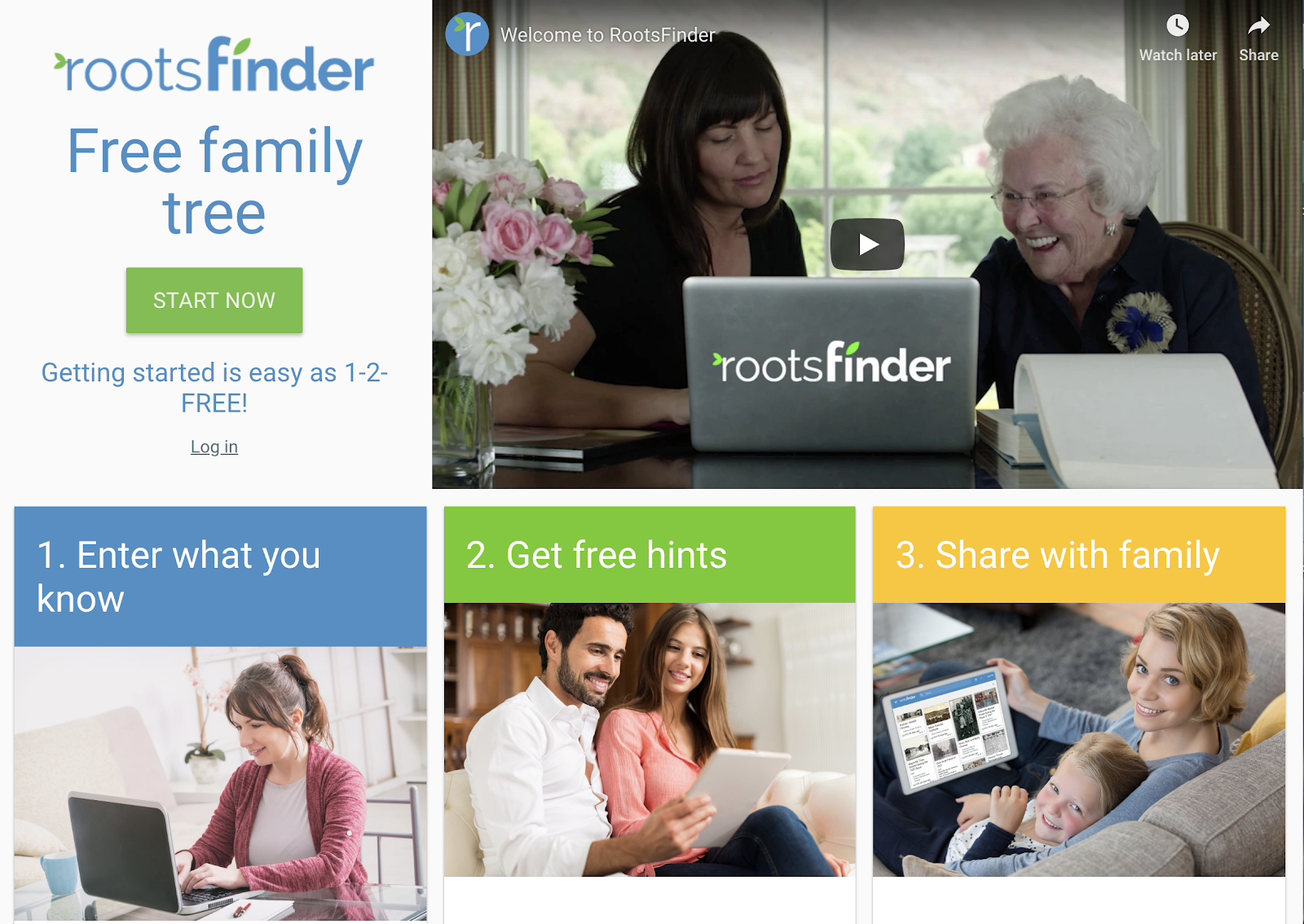
It looks like Findmypast.com is making a major effort to move into the large online family tree business by acquiring RootsFinder, Inc. Here is a short quote from the email notice I received.
Leading family history website, Findmypast, has acquired RootsFinder Inc. and their critically acclaimed RootsFinder family tree product, including new features to help customers analyze their DNA results.

The acquisition reflects Findmypast’s drive to innovate and enhance their customer experience by providing users with new ways to curate, share and explore their family history discoveries.

The acquisition will serve to help Findmypast and its partners accelerate development towards the new “Findmypast Tree” – a continuing effort that seeks to connect users anywhere in the world and offer them the opportunity to discover their family history by working together. 

Founded in 2014 by Dallan Quass, RootsFinder is a free online family tree builder that provides users with the ability to collect and store data from a variety of online sources, engaging ways to capture and visualize media, family connections as well as powerful tools to analyze DNA results. RootsFinder has established itself as popular resource for genealogists across the world and was selected as a semi-finalist in the 2017 RootsTech Innovator Showdown.
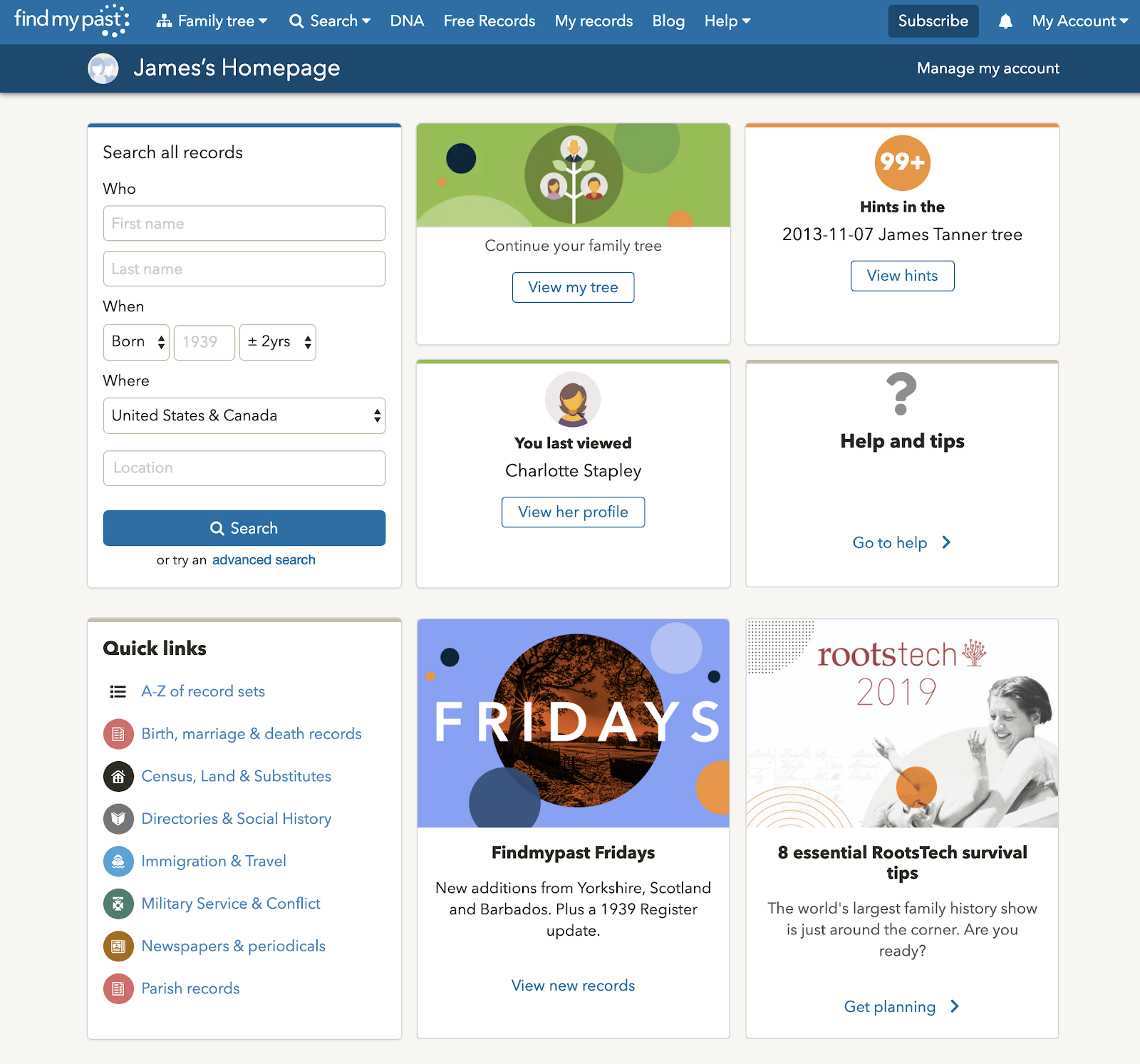
Later on in the announcement, it states that "There are no plans to change the features and services RootsFinder users currently enjoy and RootsFinder will continue to operate as a standalone product for the foreseeable future." That leaves open the possibility of having the RootsFinder resources move into the Findmypast.com family trees.  By the way, the Findmypast.com homepage has undergone some dramatic changes recently. Here is a screenshot of what mine looks like today.

Findmypast.com
I use Findmypast.com consistently and frequently in my English and British Ilse research. It is an extremely valuable part of the tools that solve difficult research problems. All four of the large online genealogical database programs are valuable tools and more genealogists need to "bite the bullet" and subscribe to all four.

Thursday, February 21, 2019

New Video from The Family History Guide: Detective Discovery Day


Detective Discovery Day

Family History can really be a family activity. Watch this extraordinary video from The Family History Guide to see what a fun family history activity could really be like. Here is the description of the video from The Family History Guide YouTube Channel.
Cousins get together to make new discoveries about their great grandparents using FamilySearch tools and by employing some creative sleuthing techniques. Watch them demonstrate activities, share what they learn, and what these discoveries inspire them to do. You can find step-by-step instructions for using these helpful tools all in one place - The Family History Guide (making family history easier, more efficient, and more enjoyable). Find more activities there also,  and have fun being detectives and making discoveries yourself!
You should subscribe to the channel because we are about to get a lot more videos. You can click on the "Video" menu bar to see all of the wonderful videos already on the channel.

If you are coming to RootsTech 2019, be sure to stop by our booth and discover The Family History Guide. We are in Booth 217 right inside the entrance to the Exhibit Floor. Here is a map to show you the location of our booth.


Believe me, the map makes sense when you are in the Salt Palace in Salt Lake City, Utah where the RootsTech 2019 Conference is being held.