Genealogy from the perspective of a member of The Church of Jesus Christ of Latter-day Saints (Mormon, LDS)

Monday, February 8, 2016

Go Ye into All the World -- Early Mormon Missionary Database


For members of The Church of Jesus Christ of Latter-day Saints and for those interested in their family history, The Church History Library is a valuable resource. But valuable family history information can also be found on many other websites such as LDS.org and The Joseph Smith Papers. Thanks to a post by my daughter Amy, I learned of one relatively new valuable source called "Go Ye into All the World." This database is described as follows:
Revelations to Joseph Smith echoed Jesus’s call to His disciples, “Go ye into all the world, and preach my gospel unto every creature” (Mark 16:15; D&C 112:28). During the century that followed the organization of The Church of Jesus Christ of Latter-day Saints in 1830, almost 40,000 men and women served proselytizing missions. They taught in 36 countries and spoke to millions of people. This database is a record of their service. 
Early Mormon Missionaries is based on two key sources. The first is a set of large ledgers—called the “missionary registers”—housed in the Church History Library. In 1860 a clerk began to record in these ledgers information about the calling of missionaries set apart in Salt Lake City to serve full-time missions. The registers, kept until 1959, are a rich source of biographical data. They contain the missionaries’ birth dates, birthplaces, parents’ names, baptism dates, the names of those who baptized them, residences at the time of their calls, their mission assignments, dates they were set apart, their priesthood offices (when applicable), and in many cases the dates they returned from their mission. The data from these registers was captured with help from the Family History Department, using the same indexing system used to capture data from other genealogical records. 
The second main source used in this database is a roster of missionaries compiled under the direction of assistant Church historian Andrew Jenson in 1925. This roster was, in part, an attempt to reconstruct a list of missions served prior to 1860.
 I knew that several of my ancestors served missions during the early days of the Church and my daughter Amy has written recently about some in both my family and in my wife's family. Here are links to some of her recent articles. Amy always provides more historical background and documents when she writes.

T, Amy. “TheAncestorFiles: Early Mormon Missionaries: John Tanner.” TheAncestorFiles, February 5, 2016. http://theancestorfiles.blogspot.com/2016/02/early-mormon-missionaries-john-tanner.html.

———. “TheAncestorFiles: Early Mormon Missionaries: John Tanner (2).” TheAncestorFiles, February 5, 2016. http://theancestorfiles.blogspot.com/2016/02/early-mormon-missionaries-john-tanner-2.html.

———. “TheAncestorFiles: Early Mormon Missionaries: William John Glade.” TheAncestorFiles, February 6, 2016. http://theancestorfiles.blogspot.com/2016/02/early-mormon-missionaries-william-john.html.

———. “TheAncestorFiles: Missionaries Wearing Fezzes.” TheAncestorFiles, January 10, 2016. http://theancestorfiles.blogspot.com/2016/01/missionaries-wearing-fezzes.html.

I looked up some of my own (and Amy's) ancestors and found the following information about my Great-great Grandfather, Samuel Linton.

United States And New Brunswick
March 1886–June 1886
Age Called: 57
United States And New Brunswick

Set Apart: 24 March 1886
End Date: 30 June 1886
Priesthood office: Seventy
Quorum: 49th
Priesthood: 49th Seventies
Called From: Nephi, Juab, Utah, United States
Set apart by: F D Richards

Eastern States
October 1897–Unknown
Age Called: 69
Eastern States
Set Apart: 15 October 1897
Priesthood office: High Priest
Priesthood: High Priest
Called From: Nephi, Juab, Utah, United States
Set apart by: J G Kimball

If you focus on how old he was when he went on his missions, you will see a sharp contrast with the 18 year olds that are serving today. 

There is a link at the bottom of the listing for Samuel Linton gives access to copies of all the pertinent documents associated with his mission call and service in The Church History Library. Here is an example:


If you are like me, it is unlikely that you have seen any of these documents before and if any of your own ancestors served missions, whether you know about the missions or not, you just might want to do your own searching. 

Sunday, February 7, 2016

What has happened to the Green Icons on the FamilySearch Family Tree?

For many years now users of the FamilySearch programs, first new.FamilySearch.org and now Family Tree, have been able to "find" deceased family members who were "eligible" for Temple ordinances.


Over the past few years, I have written several blog posts about the problems associated with the green icons, previously the "green arrows" and presently the "green Temple icons." The problems centered around the fact that many of these "available" people were actually duplicates and the ordinances had already been done for a duplicate copy.

As the FamilySearch.org Family Tree matured various checks were put in place to prevent duplication. For example, the green icons shown above show the following message when they are selected:

These green indicators of availability are presently rapidly disappearing. Most of the users of the program who are adding new names to the Family Tree are immediately reserving the names of those they add or find. My experience is that for at least the past year, I can search for a considerable period of time without finding even one green icon and even if I do find some, such as the ones above, there are limitations imposed on their use by me. There are still some available, but to find any usually requires going back further and further on the Family Tree past those parts of the Family Tree that are reliably documented.

This observation certainly does not mean that there is no work left to be done. To the contrary, there are potentially billions of names that could be added to the Family Tree. But focusing on only those that are clearly marked by Family Search and still available and unrestricted will become more and more frustrating. The time when the challenge to "find a name to take to the Temple" involved a series of clicks up and down the Family Tree is rapidly coming to a close.

I have used this analogy before. The Family Tree is like a bank account. You can only withdraw what you put in. Unlike a bank account, however, you cannot borrow for present use and go into debt. There is no untapped source of "names" that we can draw upon. The time has come to begin prospecting for new names through careful, systematic research based on the Record Hints and using the Descendancy View to find candidates.

Here is how it can be done.

Step One: Follow a family line back in time verifying the existence and reasonable accuracy of each generation.

Step Two: Choose an ancestor who was born in the early 1800s or even into the 1700s. If you come to the end of the family line entries in the Family Tree in the 1900s or the 1800s, there is very likely further research that needs to be done with that particular line. It is entirely possible that further progress in any particular family may be limited by the availability of the records, but barring that possibility, there are usually a large number of records available back into the early 1800s. Now, there are dead ends to certain family lines, but this should not be an excuse for failing to focus on other lines. I go by the adage that the exception proves the rule. There are those who are orphans with unknown parents, but this certainly an exception and not the rule.

Step Three: Switch to the remote ancestor's portion of the Family Tree by clicking on the View Tree icon under his or her name on the detail page. See this screenshot.


Clicking on this view will put the person in the center of the pedigree or landscape view. Then switch to the Descendancy View and begin to exam the descendants by generation.

Step Four: Look for the following individuals who are your cousins;

  • Couples who have married and have no children
  • Families with multiple children who show no spouses
  • People who have a blue icon and a purple icon. This usually indicates that they have no sources and yet, sources are suggested by the Record Hints. 

Step Five: Research names you find to add family members to your Temple Reservation List.

It is really not quite that simple, but the basic methodology does not change. The idea is to add new people to the Family Tree not merely to do the same people over and over again.

Substantial Upgrade to Puzzilla Premium Version

Puzzilla.com Premium Version has a tremendously useful upgrade. It is easier to illustrate than explain. If you are not familiar with the program, you select an ancestor from a chart that looks like this:


Each of the dots represents a person in the FamilySearch.org Family Tree. This is a chart showing me as the starting person at the bottom of the chart. If you click on or hover over a node (dot) the program reveals the name of the person. Like this:

This is a very convenient feature. But now, with the upgrade to the Premium Version, if you key in Control-i (hold down the Control Key and type "i") then you get the following:


Now, all the names appear. Here is a zoomed in version of the same image:


By typing Control - i again, you can see the following:


Another entry of Control - i brings up the following;


So, with the new version, you can toggle between dots, names, dates and places. Typing Control -i again takes you back to dots. This only seems to work in the Premium Version for a $39.95 annual fee.

Of course, this also works on the Descendancy View. Here is the regular Descendancy View


 Here is what the view looks like with one iteration of the view with the Control - i clicked:

You can zoom in to see the detail. You can cycle through the dates and places also.


Dramatic Changes in LDS Family History Announced at #RootsTech 2016


In a special meeting open only to specifically invited Priesthood leaders of The Church of Jesus Christ of Latter-day Saints some fundamental changes to the way family history has been done in the Church were announced. The meeting was held in conjunction with the Family Discovery Day activities at #RootsTech 2016 and before the general meeting

Although I obviously did not attend the meeting, I was able to talk to a Stake President who did and he confirmed some of the things we had learned in a meeting with FamilySearch last July. My wife and I had been waiting to find out when the sweeping new changes would be implemented. In conjunction with the changes there are new materials that will be made available over the next few months. Those attending the meeting were the Stake Presidents and their wives from the Salt Lake and Utah Valleys areas.

You can begin to see what is going on by viewing the Family Discovery Day 2016 Sessions on the LDS.org website. You should certainly watch the video and also encourage everyone around you to watch the video which, by the way, is over three hours long.

Thursday, February 4, 2016

#RootsTech 2016 Day Three (for me) Summing up so far

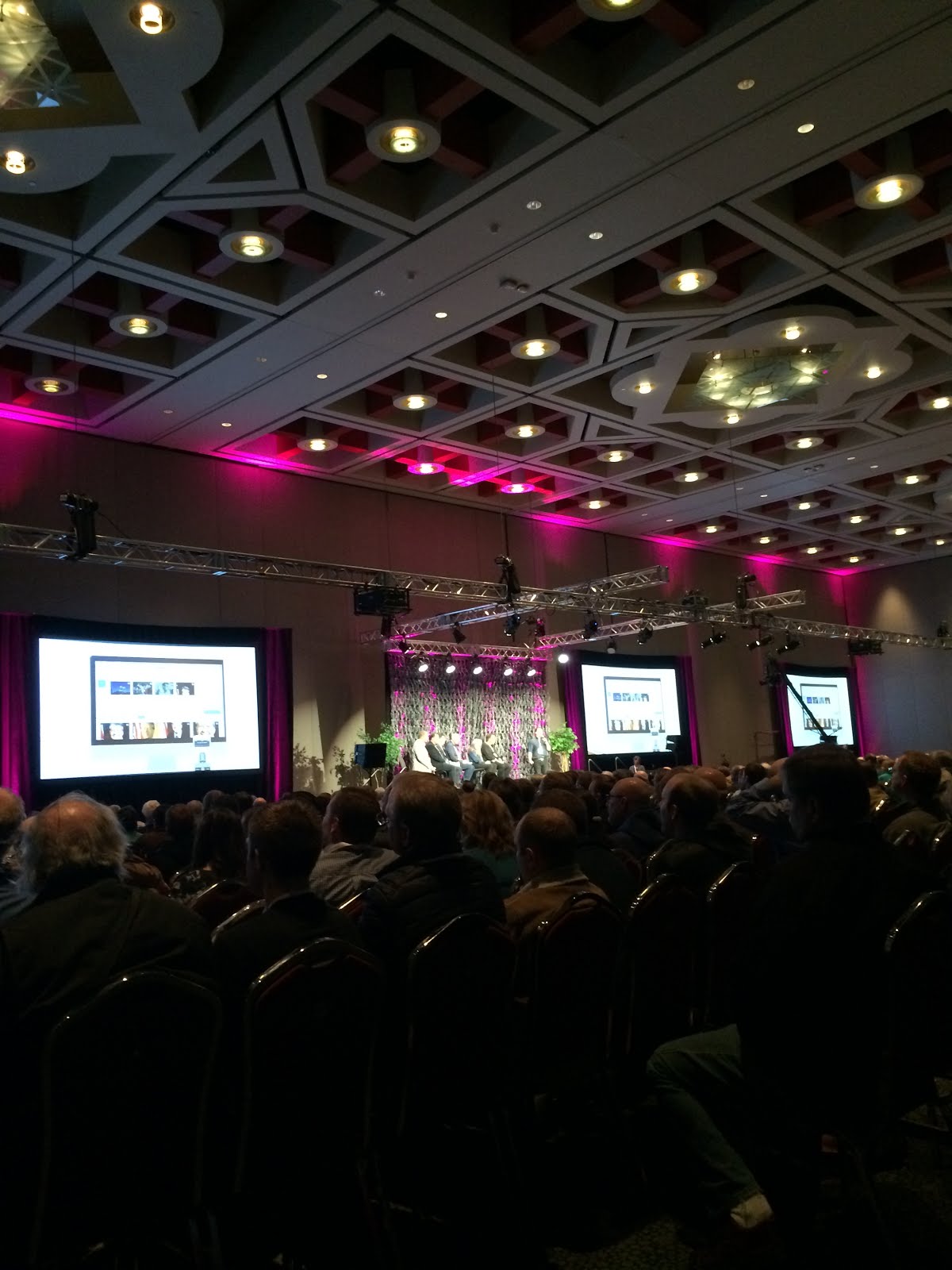
I have been as busy as usual at #RootsTech 2016. As I have mentioned previously, I am writing most of my comments on Genealogy's Star, so check there for new posts. I will try to add a few comments here from time to time. I have had some very interesting experiences this past week with the FamilySearch.org Family Tree. Here are some summary observations:

  • The so-called "green arrows" or "green Temple icons" are rapidly disappearing
  • FamilySearch is making some headway on the duplicate entry issue but is still a ways off from solving the problem completely
  • Record hints are a big topic and there will be further developments to assure that the hints are more accurately attached to individuals in the Family Tree
  • There is a huge focus on indexing more records with an emphasis on non-English records
  • The Record Hints so far have been directed to English language hints and the accuracy of the non-English Record Hints is still very low and will improve. 
  • There will be constant upgrading of all of the components of the FamilySearch.org website
Of course, more later. 


Wednesday, February 3, 2016

#RootsTech 2016 -- What's new and What's hot


It is really time to look at what is new in family history. #RootsTech 2016 gives us an insight into the newest developments and trends. The last two days, I have been spending a lot of time listening and talking about the new technology. Between the BYU Family History Technology Workshop and the Innovators Summit I am attending today. I have gotten a bird's eye view of the direction the technology is going. Here is a list of some of the topics so far. Of course, I now have an extensive list of blog topics for the future.

  • Handwriting recognition
  • Document enhancement for hard to read old manuscripts
  • Enhanced and extended hinting technologies 
  • Increasing useful and portable digitalization platforms
  • Artificial intelligence enhanced support for research
  • Increased integration of audio, video and other media
Much of the newer technology is being investigated by the BYU Family History Technology Lab. In addition, #RootsTech 2016 is giving a platform for these emergent technologies for those who interested around the world. 


#RootsTech 2016- Day Two (for me) The Innovators Summit

Well, actually, the BYU Family History Technology Workshop is more of an innovative event, however, it it is possible the presentations were more technical than anything else that will be shown at #RootsTech 2016. As usual, this year, I will try and write during the conference and report my impressions. But I am also compiling a long list of blog topics for the future. I suggest checking with Genealogy's Star for additional information. I will try and post on both blogs but I suspect I will have more to say on Genealogy's Star.